
The short answer: a flat bed, hung just about anywhere
You can sleep on your side in this one. That's the whole trick, and it's the thing no gathered-end hammock will ever let you do — spreader bars at both ends and a pad cut to fit the shell hold the XL flat, so you roll over the way you do at home instead of wrestling a banana until 2am.
Get the True Level pad ($642) if your nights get cold, the XL Insulated ($591) if they don't — both of those include the rainfly. You'll want anchor points a bit over 2.74 m apart, or none at all, because it pegs down on the ground like a bivy when there isn't a tree in sight. It sleeps one, and at 3,472 g packed it's a car-camping, paddling and short-walk-in shelter rather than a thru-hiking one.
The rest of this guide covers the decisions that change the outcome: which pad, how far apart your anchors really need to be, how it handles a cold night, and what you give up for the comfort.
| Topic | Lay-flat hammock tents — sleeping properly off the ground |
|---|---|
| Best for | Solo campers, paddlers and tourers on rocky, sloping or busy sites |
| Plan around | Anchor spacing · pad warmth · pack weight · it sleeps one |
| Buy first | The configuration with a rainfly · the True Level pad if nights get cold |
| Most useful tip | Inflate the pad properly firm — a soft pad is why it won't lie flat |
| Don't skip | Leak-testing the pad before a big trip · packing the patch kit |
Flat ground still isn't a good night's sleep
You can find a level pad, blow up a good mat and sleep perfectly well on it. Plenty of people do, and we sell plenty of mats to that end. The fair question is whether that's as good as it gets — and the people who have spent real time in both say it isn't.
A camper of forty years' standing called the Haven "the most comfortable way to sleep outside, hands down." Another reviewer said it felt like "curling up in your own bed at home." That is the case for it, and it holds on a perfect pitch every bit as much as a rough one — a flat, suspended bed is a different proposition to a mat on level dirt.
Getting off the ground then adds choice on top. Slope, rocks, roots and tree litter stop being your problem, which opens up the spots everyone else walks past: the rocky shelf with the view, the slot between two trees on a hillside, the last patch left at a busy site at 4pm because nobody fancied sleeping on the tilt.
It counts for more here than most places. You're up out of the wet if it rains through the night, and up out of the way of everything that treats a groundsheet as an invitation — the ants that find every seam, the march flies, and the goanna that has decided your camp is worth a look on its way past.
The half-measures don't close the gap. A thicker mat helps with rocks but does nothing about the shape you end up sleeping in. A stretcher lifts you off the dirt but is bulky and still wants level footing under it. Both are an improvement on bare ground. Neither gives you a flat bed hung in mid-air.
The banana problem, and why the diagonal trick only half-fixes it
A hammock removes the ground from the equation entirely, which is why hammock campers are so evangelical. But a traditional gathered-end hammock has its own well-known problem: it curves. You sleep in a shallow banana, your shoulders get squeezed, and side sleeping ranges from awkward to impossible.

Experienced hangers will tell you the diagonal lay solves this, and to a point it does. Writing for GearJunkie after testing the XL, Cameron Martindell — who had spent years in sling hammocks — put it well: the diagonal technique works once mastered, but "it always takes some adjusting and wriggling about to get comfortable." Reviewers who are committed side sleepers tend to be blunter. One veteran camper of forty years described sleeping on his back in a conventional hammock as "nearly impossible unless I am just exhausted."
Spreader-bar hammocks flatten the lay but are notoriously tippy. So the choice has traditionally been: comfortable but curved, or flat but unstable.
Two bars, one fitted pad, and a bed that stays flat
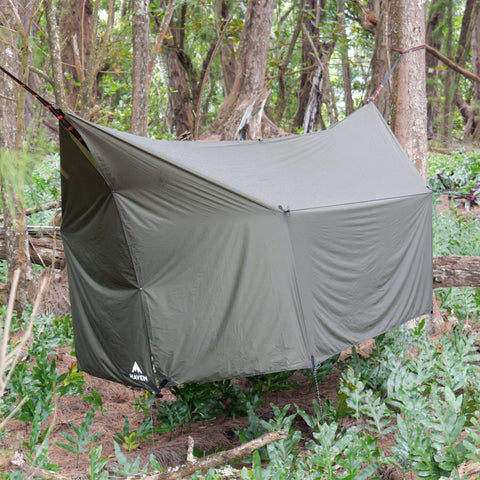
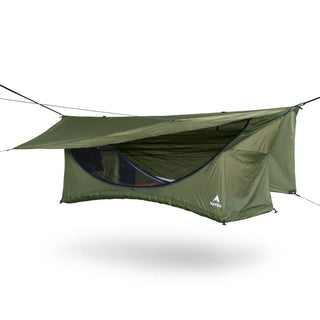
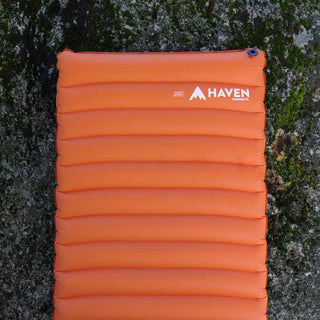
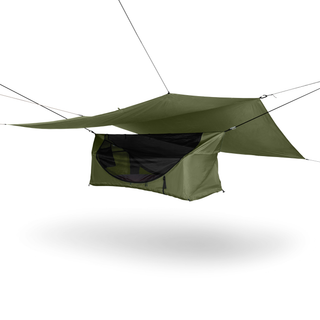
The Haven's construction is closer to a suspended tent than a hammock. Two spreader bars, one at each end, hold the body open. The fabric is cut rectangular rather than gathered. And the inflatable pad is not an accessory you drop in — it is sized precisely to the shell and forms part of the structure. GearJunkie described the result as "an upside-down suspension bridge," where the cut of the fabric, the pull of the spreader bars and the fitted rectangular pad combine to produce the flat surface.
The practical consequence is the thing worth buying it for. A reviewer who slept in the XL for seven consecutive nights in the Boundary Waters — an active sleeper who rolls and changes sides — reported waking "without the sore shoulders, stiff back, or pressure points" of a gathered-end hammock, and being able to "roll side to side like I would in a bed."

That is what the money buys. It is heavier and dearer than a one-person tent and takes up more room in the car. You will sleep better in it.
The numbers worth knowing before you commit
- Pad size: 203 × 76 cm (80 × 30 in) — the XL pad is wider and longer than the standard Haven's
- Packed size: 40 × 20 × 15 cm
- Kit weight, with rainfly and pad: 3,472 g (7 lb 10.5 oz)
- Weight capacity: 129 kg (285 lb)
- Sleeps: one
- Distance needed between anchor points: 274 cm (108 in) between end loops
- Hammock body: 210T polyester, 4,000 mm waterproof
- Rainfly: 20d ripstop nylon, 4,000 mm waterproof
That 274 cm figure is the one people forget. It is the distance between the tent's own end loops, before you add suspension straps — so you need a pair of trees comfortably further apart than that, not exactly that.
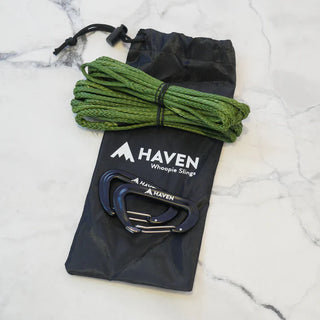
If the only two trees on your site are further apart than your straps reach, that is exactly what the Haven Whoopie Slings are for. They extend to 365 cm (12 ft), weigh 57 g the pair, and use a finger-trap mechanism that grips under tension but adjusts by hand. Made from 3.5 mm UHMWPE with an 850 kg breaking strength. In practice they turn "there's nowhere to hang here" into "there's plenty of room" — the single most useful upgrade for anyone who camps in varied bush.
R3 or R5.3 — the one option that decides your night
The XL comes with a choice of two pads, and this is the most consequential option on the page — more than colour, more than rainfly pattern.
- XL Insulated pad — rated around R3. Fine for mild and shoulder-season nights.
- True Level Insulated pad — rated R5.3. Warmer, and shaped to reduce the residual "taco" effect at the edges.
The R-value question is more important in a hammock than on the ground, because there is nothing beneath you but moving air. Cold air strips heat from your underside in a way the ground does not, which is why traditional hammock campers carry underquilts. A reviewer testing the XL with the R5.3 True Level pad in nights in the low 40s Fahrenheit (roughly 4–7°C) reported staying warm with a 40°F bag and no underquilt at all — "no cold spots underneath."
Our take: if you camp anywhere with genuinely cold nights — alpine Victoria, the Tablelands, anywhere inland in winter — pay the difference for the True Level. At the time of writing that is roughly a $51 step up, and it is the difference between needing extra insulation and not.
If you are pushing into genuinely cold country, the Haven Insulated Pad Cover is the next step, and it addresses the specific complaint hammock campers have — the cold spot under your backside and legs. It adds roughly R4 on top of your pad, which effectively doubles the warmth of the Haven insulated pads. Two useful side effects: it quietens the pad, which anyone irritated by crinkle noise will appreciate, and it folds down into a camp pillow when you aren't using it. The XL / Safari size weighs 680 g and carries a one-year limited warranty.
Rainfly or Camp Fly?
The fly that comes with the XL is small on purpose. Haven kept it compact to hold the pack size and the weight down, and for a lot of trips that is exactly the right call. It is rated to 4,000 mm, it extends out in calm weather to give you a bit of covered ground, and it battens down with loop-and-toggle connections when it starts to blow. Hanging clear of the ground, you also skip the classic tent failure where water runs down the slope and in under the floor.
Since June, Haven have also sold a bigger one: the Camp Fly. Same 4,000 mm waterproofing, considerably more of it — 361 x 290 cm (11 ft 10 in x 9 ft 6 in) against the compact original. It is a separate item rather than a configuration of the tent, it fits every version of the Haven, and it will work over other hammocks and shelters too. It arrives with 12 guylines, 12 shock cords, six stakes, two carabiners and a stuff sack, so there is nothing else to buy to rig it properly.
What you pay for that coverage is weight and bulk: 737 g for the fly on its own, or 1.19 kg once the guylines and pegs are in the bag. On a tent that is already 3,472 g, that is not nothing.
So: if you are walking in, or you already begrudge the XL its weight, stay with the compact fly it comes with. If you are car camping, paddling in, or setting up a base camp for a few days — especially anywhere the weather turns and you want boots, packs and a chair to stay dry rather than just yourself — the Camp Fly is the one that changes how camp feels. It is the difference between a shelter you get into and a camp you can sit under.
No trees? Peg it to the ground and carry on
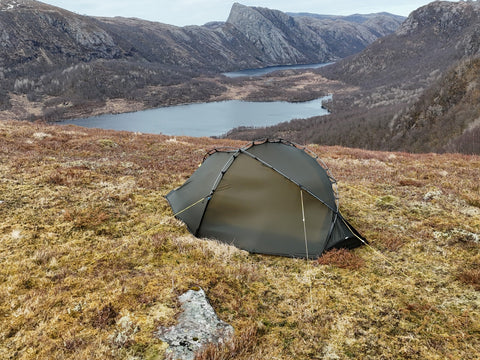
This is the feature that makes it viable in a lot of Australia. The XL is not solely a hammock — it converts to a ground pitch, bivy-style, using the stakeout kit and trekking poles. GearJunkie confirmed it "can even be set up on the ground as its own free-standing tent," and other testers have used the ground pitch on rocky and treeless sites.

It means you are not making a binding decision at booking time about whether your site has suitable trees. Anchor points if you have them, ground pitch if you don't, same shelter either way.
Living with one
None of the following should put you off — they're the things that change how you pack it, pitch it and look after it, and they're all easier to hear now than on your first night out.
- It's 3,472 g with the fly and pad, near enough double a lean one-person hiking tent. That's what makes it a car-camping, paddling, touring and short-walk-in tent rather than a thru-hiking one. If you're covering long distances on foot, the Haven Spectre is the one to look at instead.
- It's a single. There's no two-person version in the range, so a couple needs two of them.
- The side zips run the full length, and they run best when you take your weight off them rather than hauling them through. Worth knowing the first time you climb in — shift your hip, then zip.
- In humid weather, keep an eye on the fly. The compact fly sits close to the mesh, and condensation forming underneath it can work its way through. Rigging it slightly off the mesh fixes it, and it's another point in favour of the roomier Camp Fly.
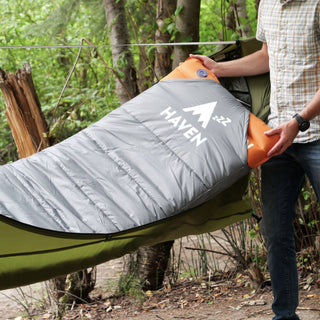
- Treat the pad as structural, because it is. Leak-test it before a big trip — inflate it hard and wipe it with soapy water, and any pinhole shows itself — and keep the patch kit in the stuff sack rather than the shed. This is the part owners deal with most.
- It's steady to sleep in. Sitting up and leaning hard to one side is where you'll feel it move, and it's a night's practice to stop noticing.
- It rewards being looked after. Owners putting serious mileage through one find the seams and zips want respect over the long run. Pack it dry, don't leave it compressed for months, and it'll keep giving you the thing you bought it for.
XL, standard, Safari or Spectre — which one's yours?
We stock the full Haven range, and the XL is not automatically the right one.
- Haven Tent XL — the wider, longer pad. The default choice for most adults, and the one to pick if you are tall, broad, or simply want the room. From $591 with a rainfly at the time of writing.
- Haven Tent (standard) — same concept, smaller pad, lighter and cheaper. Fine for most people under about six foot. The widest spread of configurations and the lowest entry price in the range.
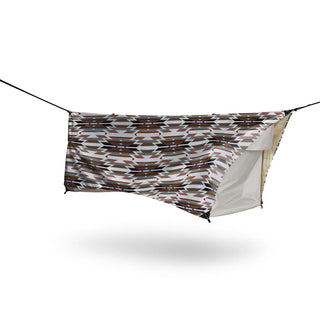
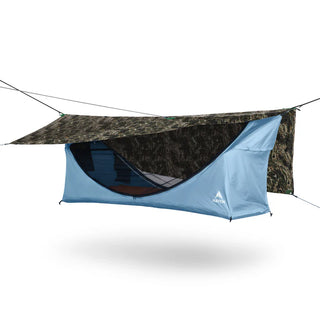
- Haven Tent Safari — the heavier-duty option in Southwest, Canopy Green, Canopy Camo and Sand.
- Haven Spectre — the lightweight version, and the one to buy if you are genuinely counting grams for backpacking. It costs more, not less, for the privilege.

Put simply: weight matters most → Spectre. Budget matters most → standard Haven. Comfort and space matter most → XL.
Pitching it, and the bit most people get wrong
Haven quotes under five minutes, and reviewers consistently describe setup as straightforward — it is pole-free, and the suspension works like a normal hammock's. We filmed a full pitch ourselves so you can see the order things happen in before yours turns up:
Two points worth knowing:
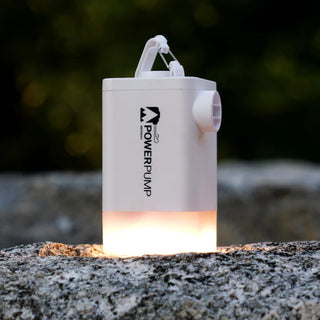
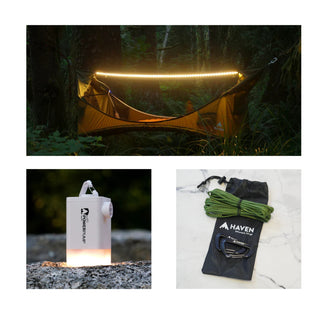
- Inflate the pad properly. Several reviewers note it needs more air than you would expect to reach the firmness that makes the lay genuinely flat. An underinflated pad is the most common reason a new owner thinks it isn't working. This is the job the Haven PowerPump exists for — it inflates the Haven pad in 36 seconds and gets it properly firm, rather than leaving you light-headed and the pad half-done. At 190 g it also works as a 4,800 mAh USB power bank and a dimmable lantern, which is three jobs from one 5 × 5 × 8 cm object.
- You can strike it in the rain while keeping your bag and clothing dry by leaving one end attached and stuffing it from the far end — worth practising once in the dry.
Look after the pad and the rest looks after itself
Given the pad is structural, pad care is the whole game. Leak-test before a big trip — inflate it hard, then a soapy-water wipe will show pinholes as bubbles. Keep the patch kit in the stuff sack, not at home. Store it dry and loosely rather than compressed for months. Re-proof the fly periodically, as you would any nylon fly.
We also stock replacement XL pads separately in both the XL Insulated and True Level Insulated versions, so a failed pad does not mean a failed tent.
Five add-ons that earn their place
We're not going to pretend every add-on is essential. These five solve problems the tent genuinely has, and they're a fair part of why owners rate the setup as highly as they do.
- Haven Camp Fly — 361 x 290 cm of 4,000 mm coverage, against the deliberately compact fly the tent ships with. 737 g on its own, or 1.19 kg with its 12 guylines, 12 shock cords, six stakes and two carabiners. This is the one that turns the XL from a shelter you climb into to a camp you can sit under, and it fits every version of the Haven.
- Haven PowerPump — inflates the pad in 36 seconds, then doubles as a 4,800 mAh USB power bank and a dimmable LED lantern. 190 g. Because the pad is structural, getting it properly firm is not a nicety, and doing that by lung at the end of a long day is how people end up with a lay that isn't flat. It will also charge your phone and run the RidgeLight.
- Haven Whoopie Slings — 57 g per pair, extend to 365 cm, 850 kg breaking strength. These widen the range of sites you can actually use, which in Australian bush is worth more than it sounds. Finger-trap adjustment means you can fine-tune the hang without unthreading anything.
- Haven Insulated Pad Cover — adds about R4 over your pad, roughly doubling its warmth, and folds into a camp pillow. The fix for cold underside on genuinely cold nights. One-year limited warranty.
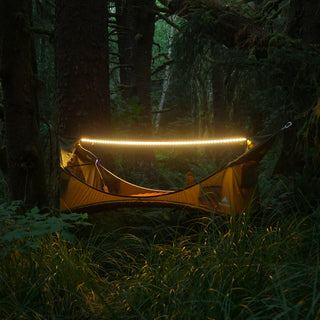
- Haven RidgeLight — a warm, dimmable LED strip made for hanging along a hammock or tent ridgeline, drawing only 6 watts, and doubling as a lantern inside its bag. Note it is USB powered and does not include a power source, which is the natural reason it and the PowerPump get bought together.

Three of those four — the PowerPump, the RidgeLight and the Whoopie Slings — are also sold together as The Haven Works Bundle, which comes in cheaper than buying them individually (about $8 less at the time of writing). The Insulated Pad Cover is bought separately.
The Haven range, with live pricing
Every Haven tent, pad and accessory we stock — current prices, sorted with our pick first.
No cover in stock matches that length yet. Browse all 11 products or ask us to source one.
Haven Tent products in stock now
The short version
The XL is heavy, dear, and sleeps one. In exchange it makes ground you could not otherwise use — sloping, rocky, wet, already taken — into a flat bed, and lets you sleep on your side while you are up there. A conventional hammock will not do that.
Buy it if you want to wake up properly rested and camp wherever you like the look of. Buy the True Level pad if your nights get cold, and the Camp Fly if you want a camp you can sit under rather than just a bed you can lie in. And don't buy it as your thru-hiking shelter — that's what the Spectre is for.
Ready for a proper night's sleep?
The full Haven Tent range is in stock, including the Haven Tent XL in Forest Green and Sky Blue with a choice of rainfly colours and both pad options.
Add the PowerPump so the pad goes up firm in 36 seconds, the Whoopie Slings so awkward tree spacing stops being a problem, the Insulated Pad Cover for cold nights, and the RidgeLight for something warmer to read by than a head torch.
Common questions
XL, standard, Safari or Spectre — which one's yours?
We stock the full Haven range, and the XL is not automatically the right one. Haven Tent XL — the wider, longer pad. The default choice for most adults, and the one to pick if you are tall, broad, or simply want the room.