The Best Supplier of Caravan & Camping Equipment in Australia 

Camping Australia is one of the pioneers in providing caravaning and camping requirements within Australia. We sell only the big name brands in the caravaning arena, such as DometicCamec, Truma and Victron.

These brands have become household names and well known for their high quality products, customer service, and long service life. Our express road transport network delivers right throughout Australia.

12V & Solar Power FAQs

Battery, solar and 12V system questions answered

What size solar panel do I need for camping?

+

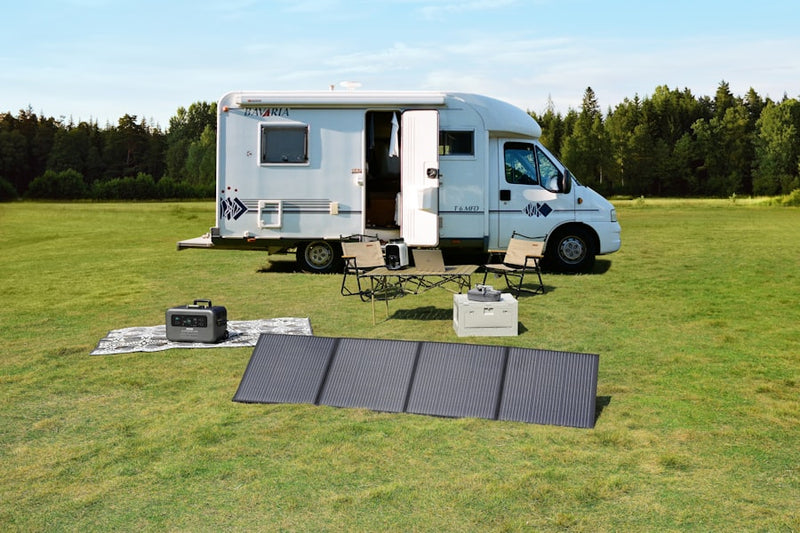
Sizing depends on what you're running. Light loads (LED lights, phone charging, USB): 80-120W panel. Fridge + lights + small loads: 150-200W minimum. Fridge + lights + induction or kettle: 300W+ with a large battery. Permanent setup on a caravan/camper: 200-400W rooftop is the sweet spot. Folding portable panels are flexible — set up in sun while you camp in shade. Always pair with a quality MPPT regulator (Victron, Renogy, Redarc) for 30% better efficiency than basic PWM units.

What's the difference between PWM and MPPT solar regulators?

+

PWM (Pulse Width Modulation) regulators are simple and cheap but inefficient — they essentially throttle solar panel voltage to match battery voltage, wasting any excess. MPPT (Maximum Power Point Tracking) regulators convert excess voltage into amperage, extracting 25-30% more energy from the same panels. For any system over 100W, MPPT is the no-brainer choice. Quality brands: Victron, Redarc, Renogy. Budget $150-400 for a 30A MPPT regulator that handles up to 400W of panels.

Should I choose AGM or lithium batteries for camping?

+

AGM (Absorbent Glass Mat) batteries are the established option — affordable ($300-400 for 100Ah), reliable, but heavy (~30kg) and limited to 50% usable depth-of-discharge (so 100Ah AGM = 50Ah real). Lithium iron phosphate (LiFePO4) is the modern choice — usable to 80-90% DoD (100Ah lithium = 85Ah real), 1/3 the weight (~12kg), 4-8x the cycle life. Initial cost is 2-3x AGM ($800-1,500 for 100Ah) but lifetime value is far better. For frequent campers, lithium pays back within 2-3 years.

How does a DC-DC charger work and do I need one?

+

A DC-DC charger takes 12V from your vehicle alternator and converts it to a properly regulated multi-stage charge (bulk/absorption/float) for your auxiliary battery. Why you need one: modern smart alternators (most cars after 2015) reduce voltage to save fuel — without a DC-DC charger your auxiliary battery never reaches full charge. Also charges at higher amperage (25-50A) than a basic isolator. Quality brands: Redarc, Renogy, Victron. Budget $400-800 for a quality 25-50A unit. Can also include MPPT solar input.

What size inverter do I need?

+

Match inverter size to your largest single load. Small inverters (300-600W) handle laptops, lights, small appliances. Mid-size inverters (1000-1500W) handle TVs, induction cooktops, hair dryers, kettles (briefly). Large inverters (2000W+) needed for microwaves, air conditioners, power tools. Pure sine wave inverters are essential for anything with electronics (TVs, laptops, CPAP machines); modified sine wave is cheaper but causes problems. Battery capacity must match — a 2000W inverter at full load draws 200A from a 12V battery, depleting 100Ah in 30 minutes.

What's the difference between an inverter and a generator?

+

Inverter: converts stored battery DC power to AC power — silent, instant, fuel-free, but limited by battery capacity and recharge time. Generator: burns petrol or diesel to produce AC power directly — unlimited runtime (with fuel), but noisy, smelly, and requires fuel storage. Inverter generator (Honda EU2200i, Yamaha EF2400iS) combines a small petrol engine with electronic inverter output — quiet, fuel-efficient, clean power for sensitive electronics. For camping, an inverter + solar is generally better than a generator. For high-load needs (air conditioning), a quality inverter generator is the practical choice.

How do I wire a 12V camp setup safely?

+

Use correctly sized cable — 12V systems suffer voltage drop over distance; oversized cable is always safer than undersized. As a guide: 6mm² for 30A circuits up to 3m, 8mm² for runs over 3m. Always fuse circuits at the battery (within 30cm) — fuse value should match cable rating, not load. Use Anderson plugs for high-current connections (50A or 175A); cigarette plugs only for low-current accessories. Crimp and heat-shrink all terminals; never use unprotected lug-and-screw connections in a vehicle environment. Get a 12V auto electrician to do major installs.

What is an Anderson plug and when should I use one?

+

A genderless high-current connector — same plug on both ends, rated for 50A (small grey) or 175A (large grey/red). Used for connecting solar panels to regulators, charging auxiliary batteries from a tow vehicle, and any high-current 12V connection that needs to be unplugged regularly. Always use the correct size for your current load (50A handles up to 600W of solar; 175A handles inverter loads or DC-DC charging). Crimp and heat-shrink the terminals properly — bad crimps melt and start fires. Mount with a weatherproof cover for permanent installs.

How long will my battery last running a fridge?

+

A typical 12V camping fridge draws 1-2A when running, with a duty cycle of 30-50% depending on temperature and contents. Daily consumption: 15-30Ah per 24 hours. From a 100Ah AGM (50Ah usable): 1.5-3 days without recharging. From a 100Ah lithium (85Ah usable): 3-5 days. With 200W of solar, you can run a fridge indefinitely in good sun. Tips to extend battery life: insulate the fridge, keep it in shade, set to 4°C (not 1-2°C), and don't open it constantly.

How do I choose a portable jump starter?

+

Match capacity to vehicle: 1000-2000 peak amps jumps petrol cars up to V6; 2000-3000 peak amps jumps V8 and small diesel; 3000+ amps jumps large diesel utes and trucks. Lithium jump starters (NOCO, Schumacher, Projecta) are now the standard — pocket-sized, 12V output, USB ports, often with built-in air compressor and emergency LED light. Charge to full before storage and recharge every 6 months. Far better than jumper cables for solo travel.

What's the best 12V LED camping light?

+

For tent and awning lighting: 12V LED strip lights (Hardkorr, Korr) at 800-1500 lumens give wide soft light. For specific tasks: USB-rechargeable lanterns (Goal Zero, Black Diamond) are versatile. For outdoor area lighting: 12V flood/spot LEDs from Hardkorr or Stedi. Use warm-white (3000K) bulbs for camp ambience; cool-white (5000K) is harsh outdoors. Always have multiple lighting sources — area lights, head torch, hand torch — so you're never caught out. Quality LEDs draw 0.1-0.5A — negligible battery impact.

How do I monitor my battery level?

+

A battery monitor (Victron BMV-712, Redarc BMS, Renogy 500A) measures actual amp-hours in/out and gives you a real percentage of state-of-charge — far more accurate than a voltmeter. Voltage alone is misleading: a battery sitting at 12.6V might be 100% charged or 50% charged depending on rest time. Quality monitors run $200-400 and pay for themselves by preventing battery damage from over-discharge. Lithium batteries with built-in BMS show state-of-charge via Bluetooth apps — simpler but less detailed.

Can I use my caravan electrics off a generator?

+

Yes, with caveats. Inverter generators (Honda EU2200i, Yamaha EF2400iS) produce clean AC power suitable for caravan electronics, fridges, and air conditioners. Sizing: 2.0-2.4kVA handles a single AC; 3-4kVA handles AC + microwave + chargers. Plug into the caravan's 240V inlet as you would a powered site. Conventional (non-inverter) generators produce dirty power that can damage sensitive electronics — avoid for caravan use. Many free-camp sites have generator-use rules (typically 8am-5pm, max noise levels) — check before running.

What's a battery management system (BMS)?

+

A BMS is the smart electronics in modern lithium batteries that protect against: over-discharge (under-voltage cutoff), over-charge (over-voltage cutoff), short-circuit, over-temperature, and cell imbalance. Built-in BMS is standard on quality LiFePO4 batteries (BB, Enerdrive, Power-Sonic, Renogy). External BMS units (Redarc Manager) integrate solar, DC-DC, and battery management in a single device with a remote display. The BMS is what makes lithium safer and longer-lasting than AGM — never buy a lithium battery without a quality BMS.

How do I plan a full off-grid power system?

+

Calculate daily power consumption first: list every load (fridge 15-30Ah, lights 5Ah, USB charging 5Ah, water pump 2Ah, inverter loads X Ah). Add 20% buffer. Battery capacity: aim for 3 days of autonomy without solar input (so daily consumption × 3, divided by usable depth of discharge). Solar: divide daily consumption by 4 hours of "good sun" — that's your minimum panel wattage. Always oversize: real-world conditions (clouds, shade, dust) reduce solar output by 30-50%. Get a 12V specialist (Redarc, Enerdrive dealers) to design and install for serious setups.